21 May 2026
Weather Window Adjustments: Forecast Integrations Shaping Live Totals Decisions Across Major European Soccer Leagues
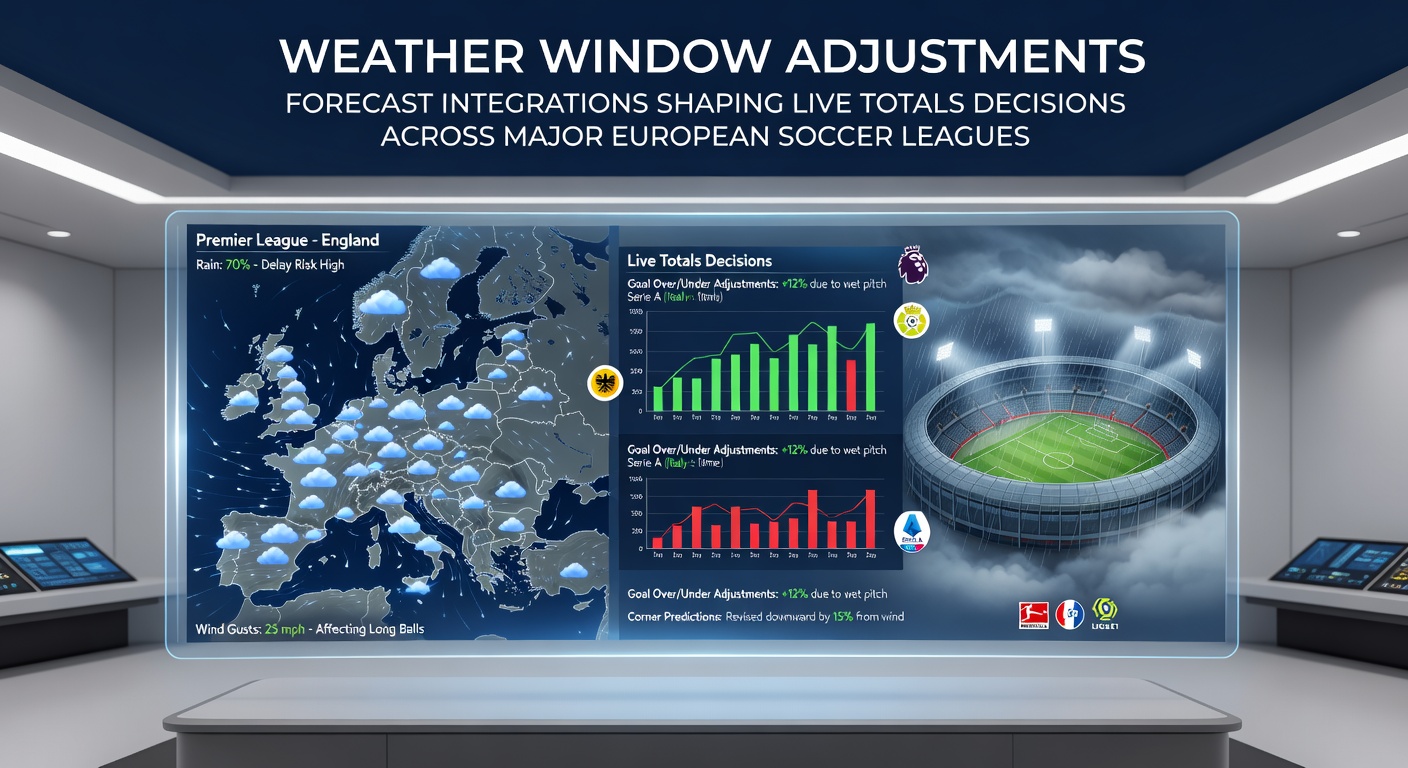
Weather patterns across major European soccer leagues have long influenced match outcomes yet the integration of precise forecast models into live totals betting has accelerated notably by May 2026 with platforms adjusting over and under lines in real time as conditions shift during matches in the Premier League, Bundesliga, La Liga, Serie A and Ligue 1. Data from meteorological services shows that wind speeds above 25 kilometers per hour combined with temperatures below 10 degrees Celsius tend to reduce total goals by limiting long passes and high crosses while heavy rainfall increases slip rates and lowers shot accuracy on natural grass surfaces.
Analysts at betting operators now pull hourly updates from high-resolution models that track precipitation windows within 15-minute intervals allowing them to recalibrate totals lines before kickoff and again at halftime when forecasts indicate clearing skies or incoming fronts. In the Bundesliga for instance clubs playing at northern venues have recorded fewer combined goals during May evening fixtures when sudden showers coincide with the final 30 minutes according to league performance archives.
Forecast Data Streams and Real-Time Line Adjustments
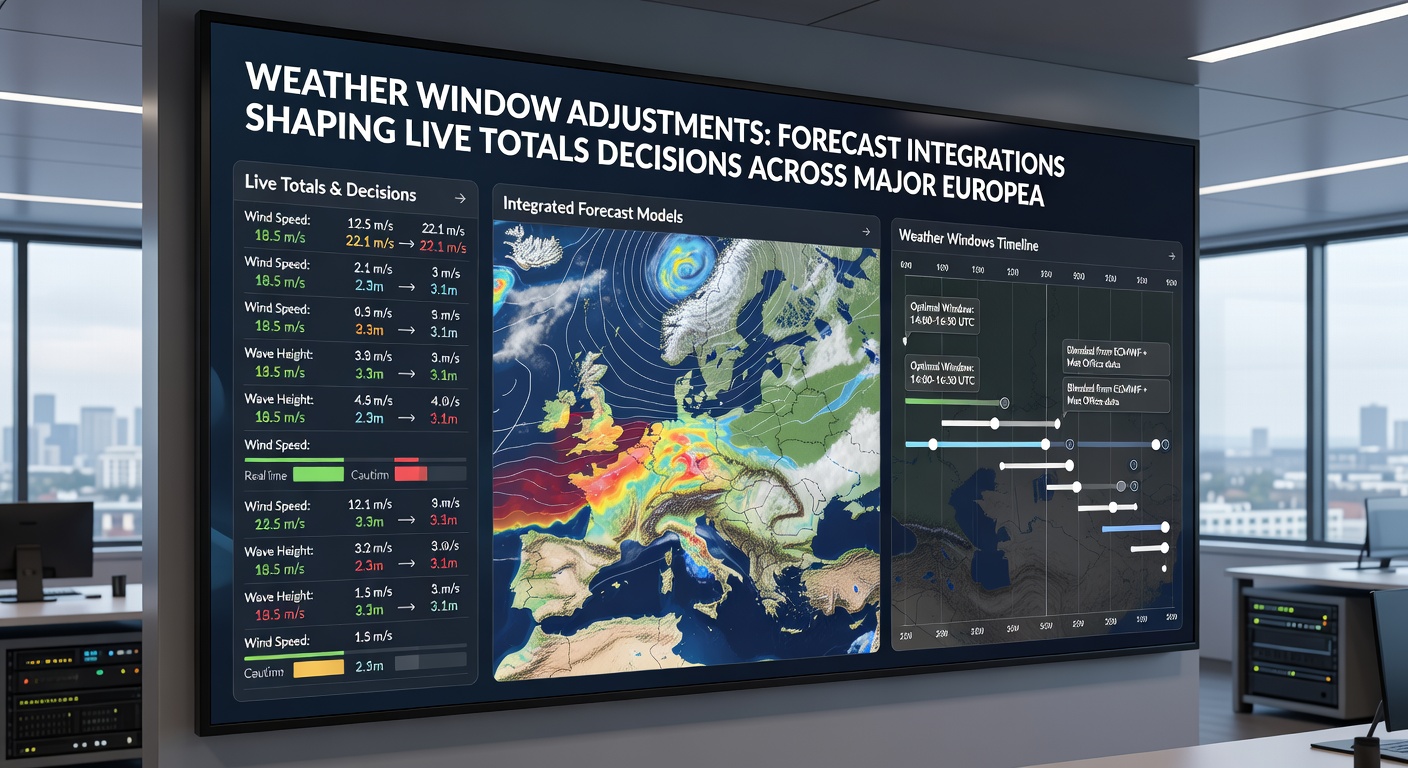
Operators integrate outputs from the European Centre for Medium-Range Weather Forecasts with stadium-specific sensors that measure wind direction at pitch level and moisture content in the turf; these inputs feed algorithms that modify expected goal totals within seconds of each update. When models project a 40 percent chance of rain starting in the 60th minute live markets often see the over line drop by 0.25 goals while under positions gain traction among professional syndicates tracking the same feeds.
La Liga matches in southern Spain demonstrate different dynamics where rising temperatures above 28 degrees Celsius during afternoon kickoffs correlate with reduced player sprint distances and fewer shots on target per 90 minutes based on tracking data released by the league. Forecasters refine these projections by incorporating local topography effects such as valley winds that funnel through venues like the Wanda Metropolitano and alter ball flight paths in the second half.
League-Specific Patterns Observed in Spring 2026
Serie A fixtures scheduled in May 2026 reveal elevated under totals when coastal venues experience evening humidity spikes above 75 percent that slow ball roll and increase defensive compactness. Data compiled by Italian football analytics groups indicates a 12 percent drop in expected goals during such windows compared with drier conditions earlier in the afternoon. Operators respond by tightening over lines immediately after the opening whistle when radar shows approaching moisture bands.
The Premier League presents a contrasting profile because its mix of northern and southern venues produces rapid weather transitions within single matchdays. A front arriving from the Atlantic can turn a projected 2.8-goal game into a 2.3-goal contest within 45 minutes prompting live bettors to monitor forecast refresh cycles that arrive every 10 minutes from national weather agencies. Clubs with high-pressing styles suffer most when gusts exceed 30 kilometers per hour because forward runs lose effectiveness and turnovers rise.
Technology Behind Window Adjustments
Modern systems combine satellite imagery, ground radar and on-site anemometers to create rolling 90-minute forecast horizons that betting engines ingest directly. When precipitation probability crosses 60 percent during the second half algorithms automatically flag the market for adjustment and push revised totals to trading desks. Ligue 1 encounters in western France show similar responsiveness with data from Meteo-France indicating that persistent drizzle reduces successful through-ball completions by roughly 18 percent in the final quarter.
Stadium operators in the Bundesliga have begun publishing live micro-climate readings that external forecast providers incorporate into their models giving traders an additional layer of granularity. These feeds help distinguish between light mist that barely affects play and heavier bands that force tactical shifts toward shorter passes and set-piece focus. Observers note that the most active live totals adjustments occur between the 50th and 70th minutes when forecast confidence intervals narrow and operators can lock in revised lines with greater precision.
Impact on Professional Betting Workflows
Professional syndicates maintain dedicated meteorologists who cross-reference multiple models against historical match logs for each venue and surface type. When two independent forecasts diverge by more than 20 percent on precipitation timing syndicates often pause activity until consensus emerges because the resulting line movement can erase previously identified edges. European football leagues have seen a measurable uptick in such data-driven approaches during the 2025-2026 campaign particularly in the closing weeks when title races and relegation battles heighten scrutiny on every goal.
Figures released by the German Football League show that matches with documented weather-related line adjustments produced total goals within 0.4 of revised projections 78 percent of the time compared with 64 percent for unadjusted markets. This pattern holds across La Liga and Serie A venues where operators have standardized the ingestion of forecast APIs into their risk engines.
Conclusion
Integration of granular weather windows into live totals markets has become standard practice across Europe's top soccer leagues by May 2026 with operators and syndicates relying on continuous forecast streams to recalibrate expectations as conditions evolve during matches. The approach relies on verified meteorological data combined with venue-specific performance histories that allow precise adjustments rather than broad assumptions. As leagues complete their seasons these systems continue to refine the connection between atmospheric variables and goal expectancy in real time.