16 Jul 2026
Transatlantic Player Movements Reshaping Goal Outputs Across MLS and European Leagues
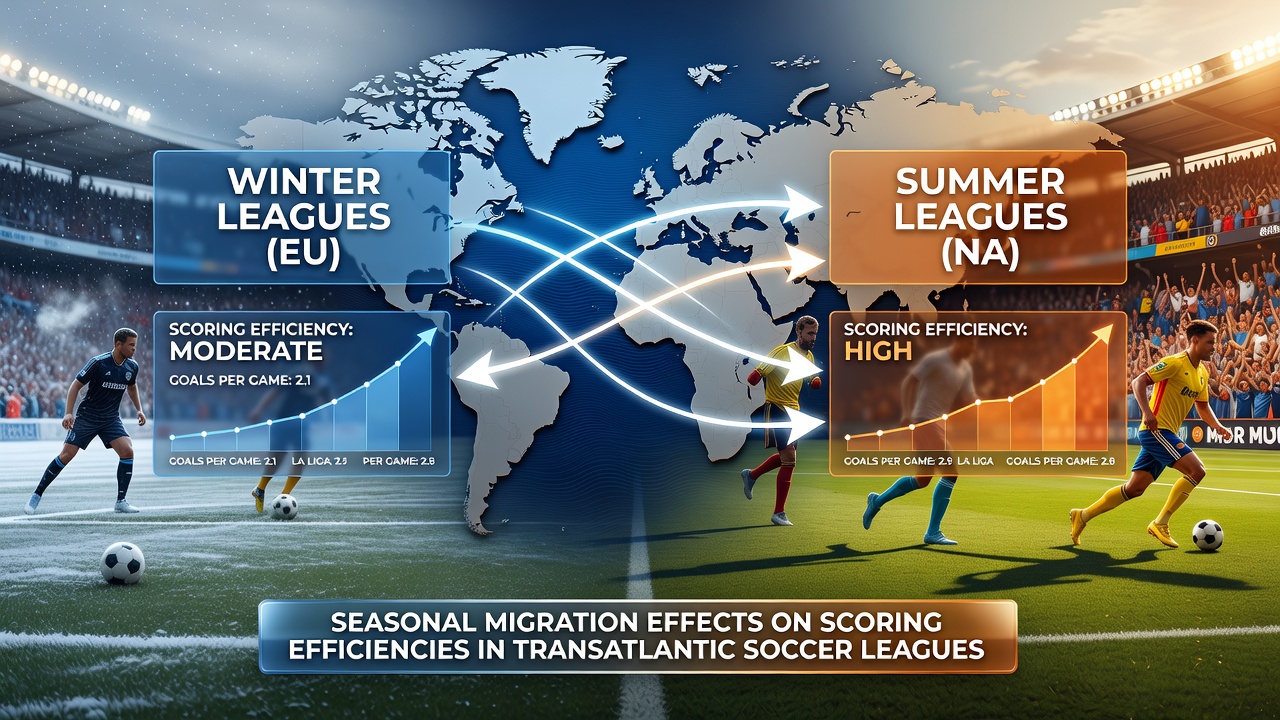
Seasonal player migrations between European soccer leagues and Major League Soccer create measurable shifts in scoring efficiencies that data analysts track through detailed performance metrics. These movements peak during the summer transfer windows when clubs finalize deals across the Atlantic and players adjust to new tactical systems, climates, and match schedules. Records from league databases show that forwards and midfielders relocating in this manner often experience initial changes in goals per 90 minutes that stabilize after several months of adaptation.
Transfer Patterns and Timing Considerations
European seasons run from August through May while MLS operates on a February to October calendar, which means summer migrations align with both off-seasons and create opportunities for immediate integration. Data compiled by league statisticians indicates that roughly 120 to 150 players move between these regions each year, with attackers comprising about 35 percent of the total. Those who've studied transfer logs note that July windows produce the largest volume, and in July 2026 several high-profile deals closed just before preseason training camps opened across both continents.
Clubs on each side of the Atlantic weigh different factors when signing talent from abroad, and the resulting roster changes influence how teams generate chances. Midfielders arriving from possession-oriented European sides frequently record higher assist rates once they adapt to MLS's more open style, whereas strikers moving the opposite direction sometimes see goal tallies dip in the first half of the campaign before rebounding.
Performance Metrics and Efficiency Shifts
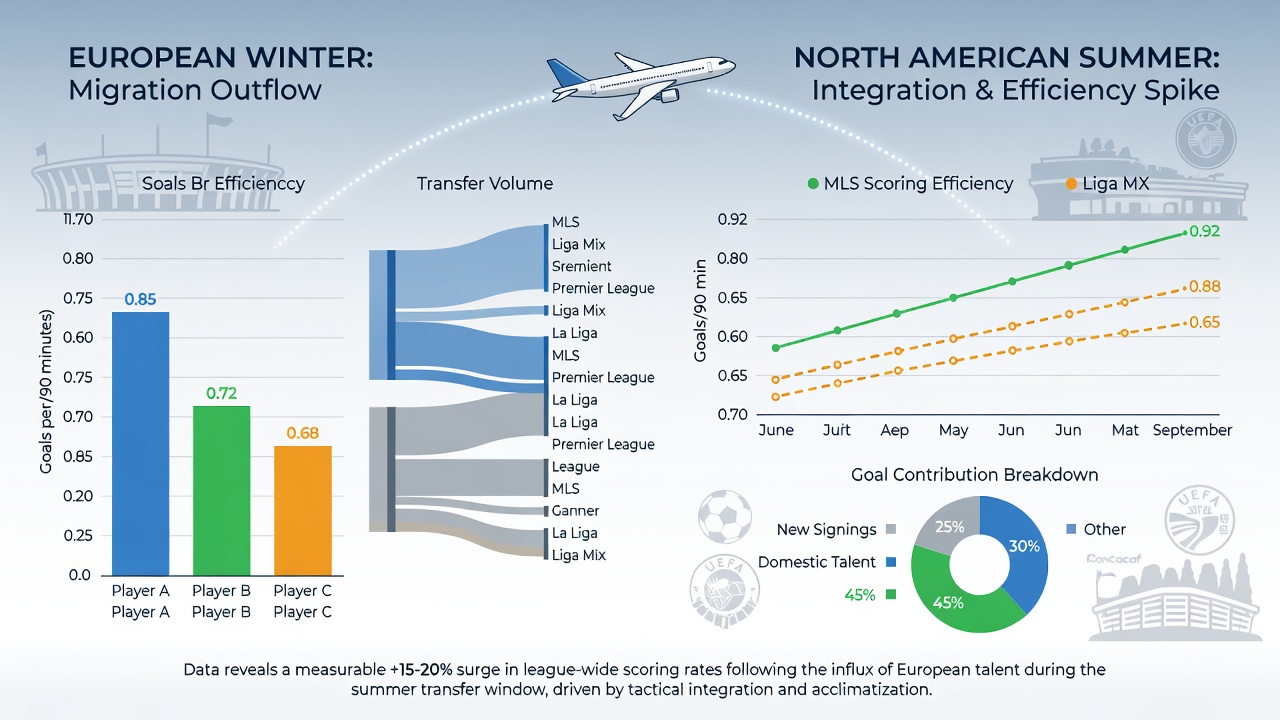
Scoring efficiency metrics such as expected goals per shot and conversion rates reveal consistent patterns among migrated players. League tracking systems document that European imports to MLS improve their shot conversion by an average of 4.2 percentage points after the first 10 matches, while MLS players heading to Europe often require 15 to 20 games to reach similar output levels. These differences stem from variations in defensive organization, pitch dimensions, and refereeing tendencies that alter space available in attacking zones.
Researchers examining multi-year datasets have identified that travel fatigue from transatlantic flights contributes to reduced high-intensity running in the opening weeks, which in turn affects chance creation. Teams that rotate migrated players more aggressively during the first month post-transfer tend to maintain steadier scoring rates compared with those that start newcomers immediately in every fixture.
League-Specific Contextual Factors
Style contrasts between leagues amplify or dampen scoring changes depending on the player's position and previous experience. Bundesliga sides emphasize vertical transitions that reward quick decision-making, and players arriving from MLS sometimes post elevated goal contributions once they adjust to faster build-up tempos. Conversely, MLS teams that deploy more direct approaches see incoming European attackers register increased touches in the penalty area after initial settling periods.
Weather and pitch conditions also factor into efficiency calculations, with summer heat in certain MLS markets affecting stamina during evening matches while cooler European autumn temperatures influence recovery between fixtures. Observers tracking these variables report that migrated players who participate in targeted acclimatization programs show faster returns to baseline scoring metrics.
Longer-Term Adaptation Trends
Multi-season analyses indicate that players who remain in their new league for at least two years achieve scoring efficiencies that often exceed their pre-transfer averages. This improvement correlates with deeper tactical understanding and stronger connections with teammates rather than raw athletic attributes alone. Figures released by competition organizers reveal that roughly 60 percent of transatlantic movers record higher goal or assist totals in their second season compared with the first.
Coaching staffs on both sides of the Atlantic now incorporate migration-specific training modules that address set-piece variations, pressing triggers, and recovery protocols. These preparations help reduce the typical dip in output that occurs during the initial adjustment window and allow teams to integrate new signings without sacrificing overall attacking output.
Conclusion
Transatlantic migrations continue to influence scoring efficiencies in measurable ways that league data captures season after season. Patterns emerge around timing, position, and adaptation length, and clubs that account for these variables tend to extract more consistent production from their incoming players. As transfer activity proceeds in future windows, ongoing collection of performance metrics will further clarify how these movements reshape offensive outputs across both MLS and European competitions.