24 May 2026
Schedule Congestion Impacts on Total Points in European Basketball Leagues
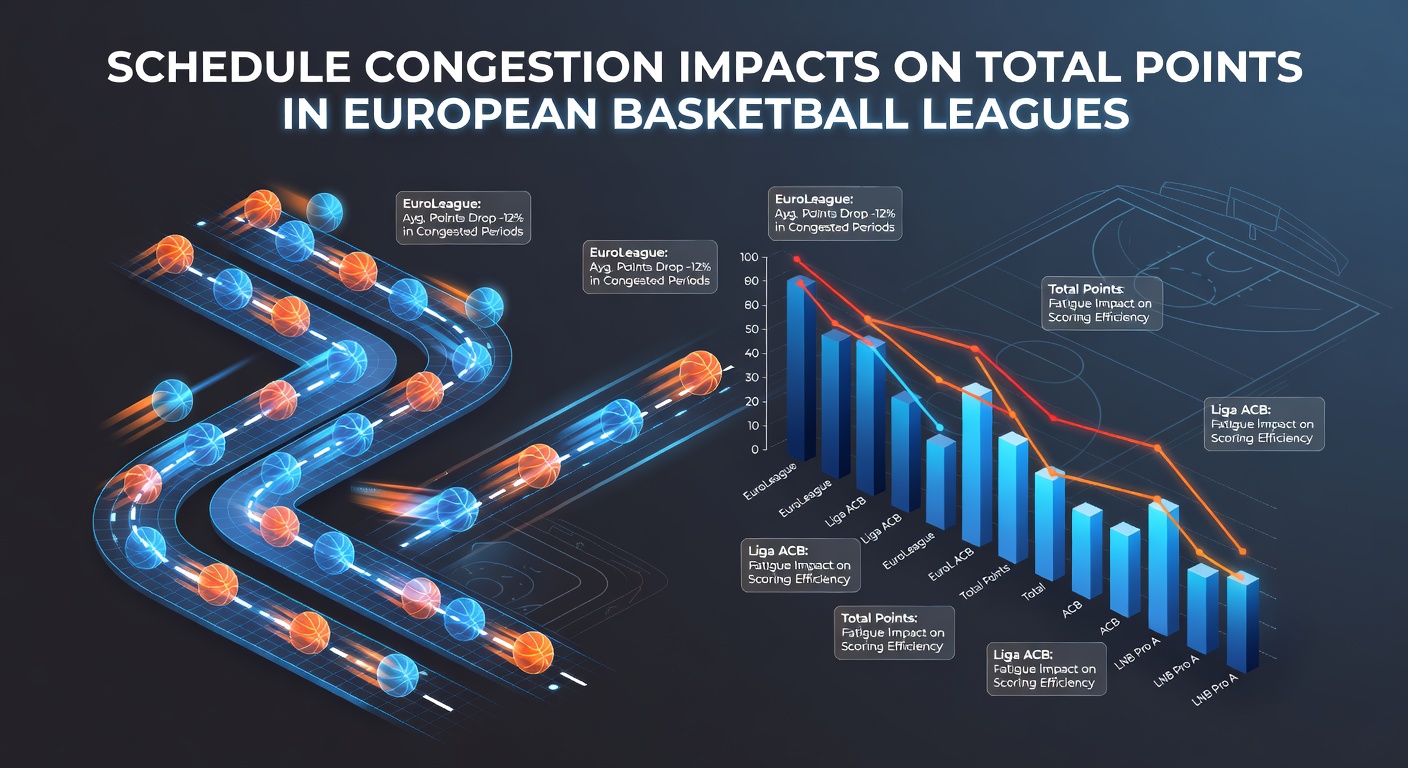
European basketball leagues operate under demanding calendars that pack regular season games, cup competitions, and international tournaments into tight windows, creating schedule congestion that alters scoring patterns across multiple seasons. Researchers tracking data from the EuroLeague and domestic circuits have noted measurable drops in total points when teams face three or more games within a seven-day stretch, particularly during the spring months when travel demands intensify. Observers note that back-to-back fixtures combined with cross-border travel often reduce offensive efficiency because players accumulate fatigue that limits shooting accuracy and transition play speed.
How Congestion Alters Game Totals
Data from the 2024-2025 EuroLeague season shows average game totals fell by 6.8 points when teams played on zero or one day of rest compared with standard three-day intervals, while the Spanish Liga ACB recorded similar declines of 5.2 points under comparable conditions. Analysts reviewing play-by-play logs found that teams in congested periods attempted fewer three-pointers and converted at lower rates because defensive rotations slowed and help defense became less aggressive. The Turkish Basketball Super League produced comparable results where totals dropped an average of 4.9 points during March road trips that spanned four cities in ten days.
Travel distance compounds these effects because many clubs cross multiple time zones within the EuroLeague schedule, leading to disrupted sleep cycles that impair reaction times and decision-making under fatigue. Studies conducted by sports science departments at universities in Spain and Germany indicate that heart rate recovery metrics worsen after consecutive away games, correlating directly with reduced fast-break opportunities that typically contribute high-value points. In May 2026 the EuroLeague playoffs overlapped with several national league title races, creating additional fixture pile-ups that stretched some rosters across six games in fourteen days and produced totals 7.1 points below seasonal averages according to league tracking systems.
League-Specific Patterns and Contributing Factors
Each competition presents unique congestion profiles that influence scoring differently. The EuroLeague features midweek road games that force recovery periods shorter than those in the Italian Lega Basket Serie A, where domestic travel distances remain shorter and totals show smaller variances. French LNB Pro A schedules often cluster games around national team windows, resulting in point totals that dip most sharply in the weeks immediately following FIBA international breaks. German Bundesliga teams experience congestion spikes during the BBL Pokal cup rounds that coincide with EuroCup commitments, and historical data reveals a consistent pattern of lower combined scoring when rest days fall below forty-eight hours.
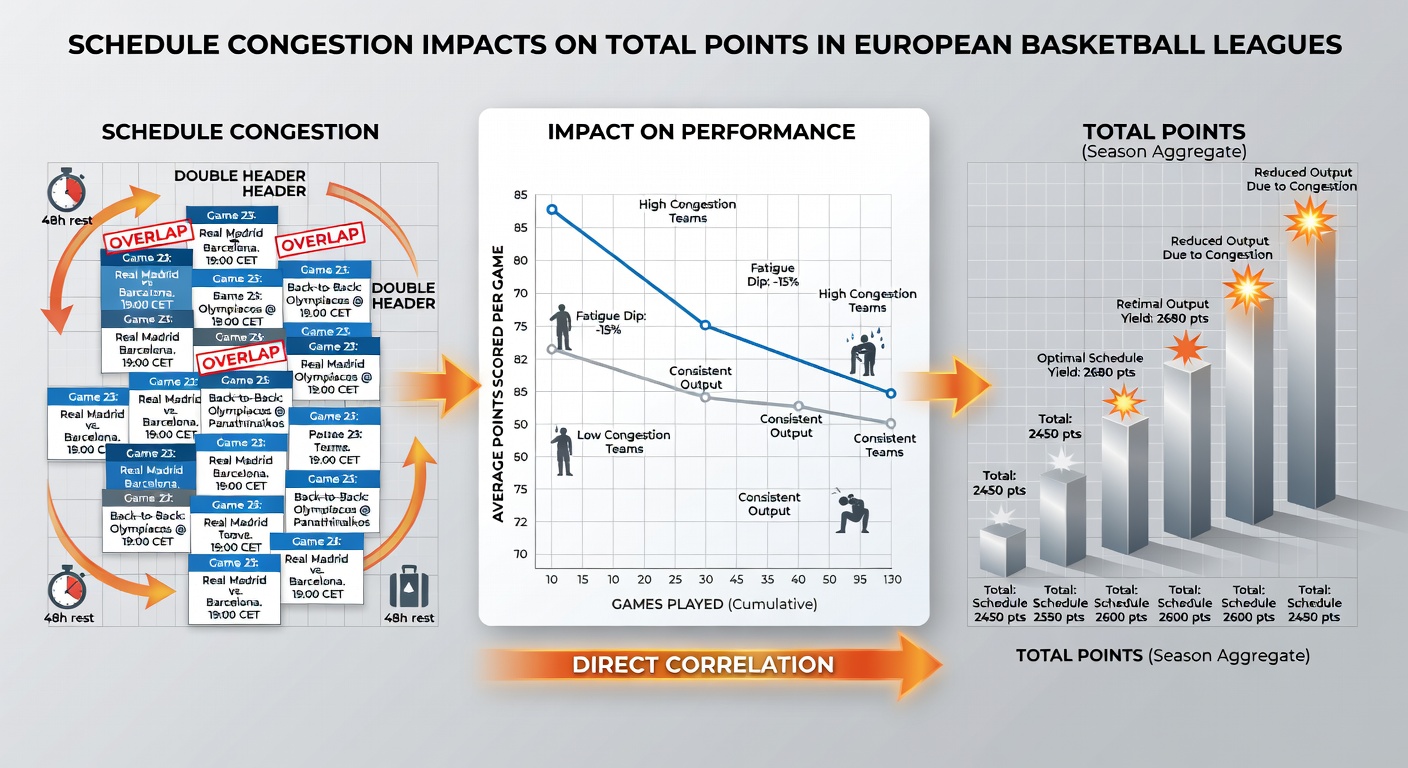
Coaching adjustments play a visible role because staffs reduce minutes for star players during congested stretches, shifting offensive load to bench units that generate fewer points per possession. Injury rates also rise under heavy loads, removing high-efficiency scorers and further depressing totals. A report published by the European College of Sport Science in 2025 examined load management across five leagues and found that teams employing strict rotation protocols maintained totals closer to seasonal norms, whereas those relying on smaller rotations experienced sharper declines during peak congestion months.
Tracking Data Through the 2025-2026 Campaign
League statisticians monitoring the current season have compiled rest-day matrices that allow direct comparison of scoring outputs. Games following zero rest days averaged 158.4 combined points in the EuroLeague through April 2026, while contests with at least two rest days reached 165.2 points. Similar gaps appear in the Adriatic ABA League where totals fell below 160 points in 68 percent of congested fixtures. External factors such as venue climate control and referee crew assignments show secondary correlations, yet rest intervals remain the strongest predictor according to regression models released by academic researchers in Portugal.
National federations have begun publishing fixture calendars earlier to help clubs plan recovery protocols, yet overlapping commitments with continental events continue to create unavoidable clusters. In May 2026 several playoff series extended into double-overtime contests that further taxed already fatigued squads, producing outlier low-scoring games that deviated from expected totals by double-digit margins. Performance tracking software now flags high-risk congestion periods so medical staffs can prioritize sleep and nutrition interventions that partially mitigate scoring drops.
Conclusion
Schedule congestion consistently correlates with reduced total points across European basketball leagues through mechanisms of player fatigue, reduced offensive efficiency, and altered rotation patterns. Data collected through the 2025-2026 season confirms that rest intervals below forty-eight hours produce measurable declines in combined scoring, with variations by league reflecting differences in travel demands and competition density. Continued monitoring by league statisticians and sports science teams provides ongoing evidence that congestion remains a primary variable shaping game totals in these competitions.