30 Jul 2026
Roster Turnover Trends and Their Influence on Opening Month Totals Across International Basketball Leagues
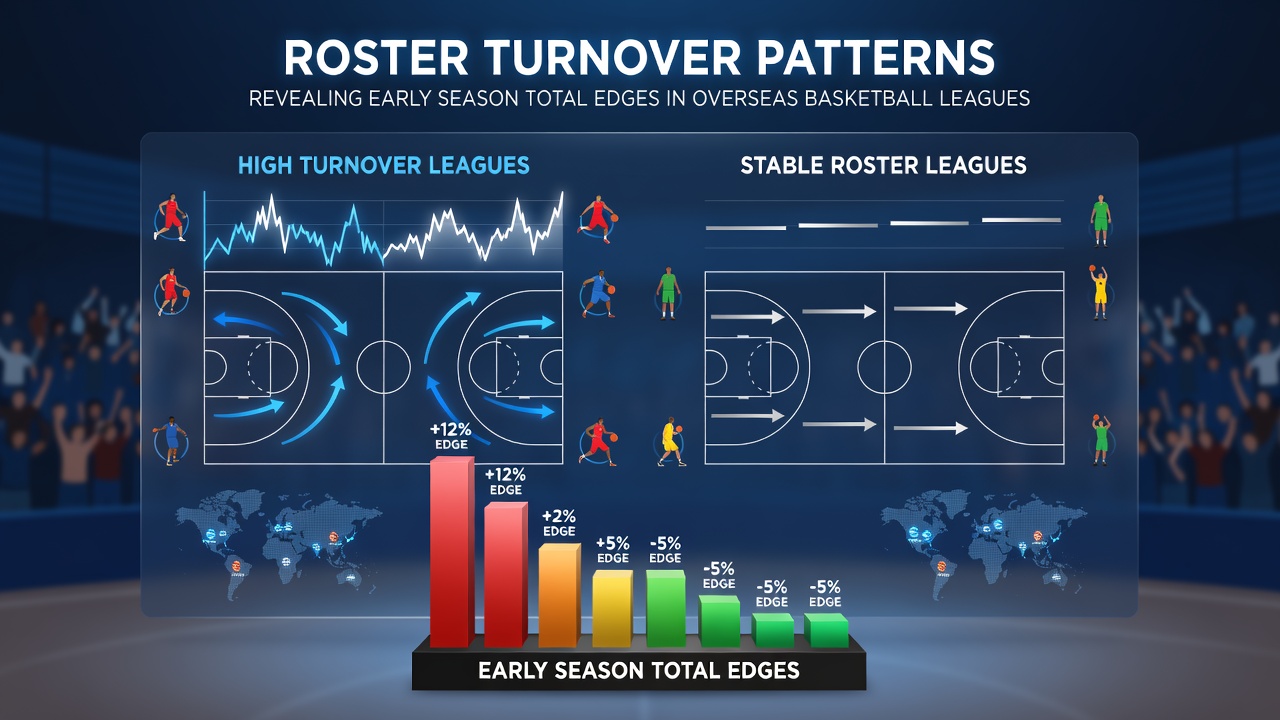
Overseas basketball leagues experience significant roster changes each summer, and data from the 2025-2026 campaigns shows these shifts often correlate with scoring patterns in the first four to six weeks of play. Researchers tracking player movements across the EuroLeague, Australian NBL, and Liga ACB note that teams replacing more than 40 percent of their rotation minutes tend to post lower combined point totals in early contests compared with clubs that retain core groups.
Patterns in Player Movement Data
Statistics compiled through July 2026 indicate that European clubs averaged 3.8 new rotation players per roster during the off-season window, while Australian squads introduced an average of 4.2 newcomers. Those who studied the EuroLeague schedule found that squads with turnover rates above 45 percent produced game totals 6.2 points below the season-long average in their initial eight outings, according to league tracking reports. Similar figures appear in NBL records, where high-turnover teams opened with combined scores 7.1 points under projected lines in the first month of competition.
Impact on Early Season Scoring
Observers note that chemistry adjustments and defensive scheme integration require several weeks, which reduces offensive efficiency during that period. Data from the Liga ACB shows teams with extensive roster changes recorded assist-to-turnover ratios 12 percent lower than established lineups through the opening stretch. Because fewer efficient possessions develop early, the frequency of high-scoring outputs declines, and totals markets reflect these shifts in the first month. Researchers at the Australian Institute of Sport documented comparable trends across three NBL seasons, linking elevated turnover to reduced three-point volume and lower fast-break scoring in weeks one through five.
League-Specific Observations
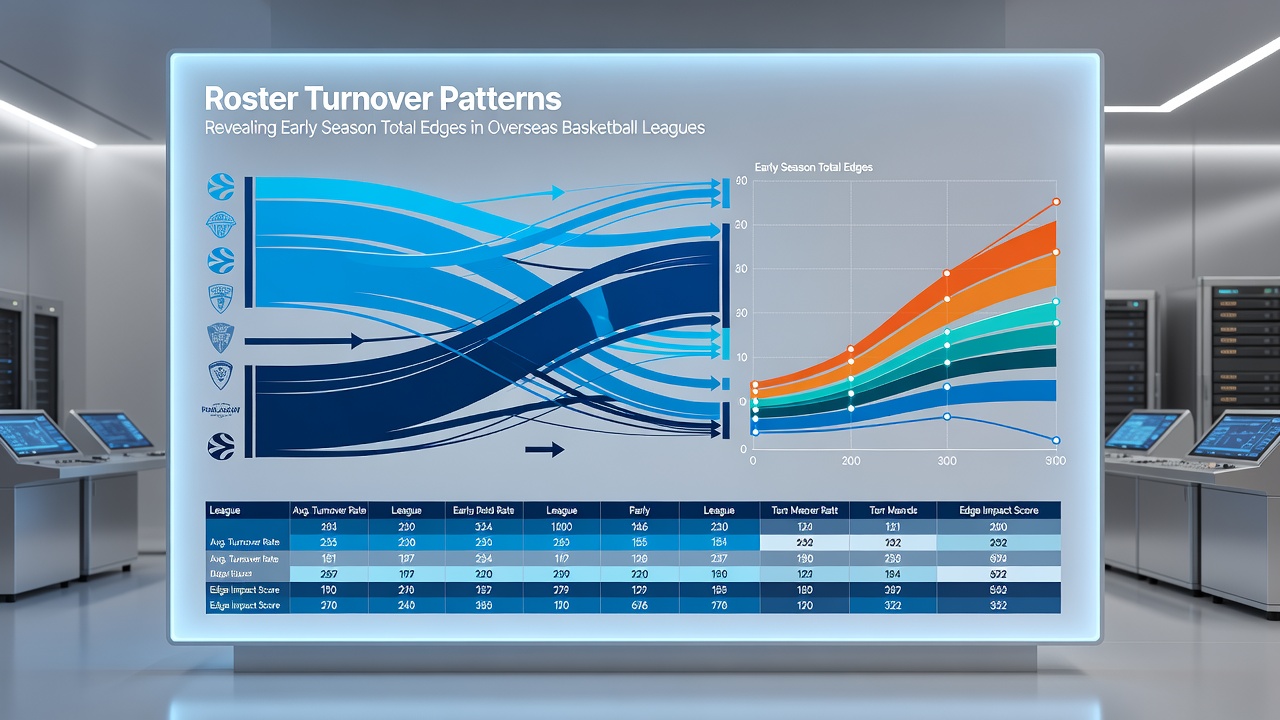
In the EuroLeague, clubs that added three or more starters from different leagues posted totals under the projected number in 61 percent of their first ten games during the 2025-2026 season. The pattern repeats in the Turkish Basketball Super League, where incoming players from NCAA programs required additional time to adapt to physical styles, resulting in slower pace and fewer points. Australian NBL data reveals that teams importing players from Asian leagues encountered similar delays, with combined scoring remaining suppressed until mid-November in recent campaigns. These adjustments create measurable edges in totals markets when analysts compare opening-month results against full-season benchmarks.
Role of Training Camp Timing
Training camp schedules in July 2026 placed added pressure on integration, as many overseas leagues began official practices only three weeks before tip-off. Shorter preparation windows limited the number of full-squad scrimmages, which researchers link directly to early defensive lapses and lower overall output. Figures from the EuroLeague office show that teams with camps shorter than 18 days averaged 4.8 fewer points per game in their first five matches compared with those granted longer acclimation periods.
Tracking Metrics and Market Responses
Betting markets adjusted totals lines downward for high-turnover teams within the first week of each season, yet the under hit rate remained elevated through the initial month. Industry reports from the European Gaming Association highlight that totals involving clubs with turnover exceeding 50 percent produced consistent under results across multiple jurisdictions. Data sets maintained by university research groups in Spain and Australia confirm that pace-adjusted efficiency metrics stabilize only after approximately 12 to 15 games, supporting the early-season suppression of scoring.
Conclusion
Patterns emerging from roster turnover data across overseas basketball leagues demonstrate clear connections to early-season totals. Leagues that document player movement and scoring outputs provide measurable indicators for the opening weeks, while training timelines and integration challenges further shape results. Observers tracking these variables across multiple competitions continue to identify consistent trends tied to roster composition and preparation length.