30 Jun 2026
Referee Rotation Cycles: How Assignment Patterns Shift Draw Probabilities Across Bundesliga Weekends
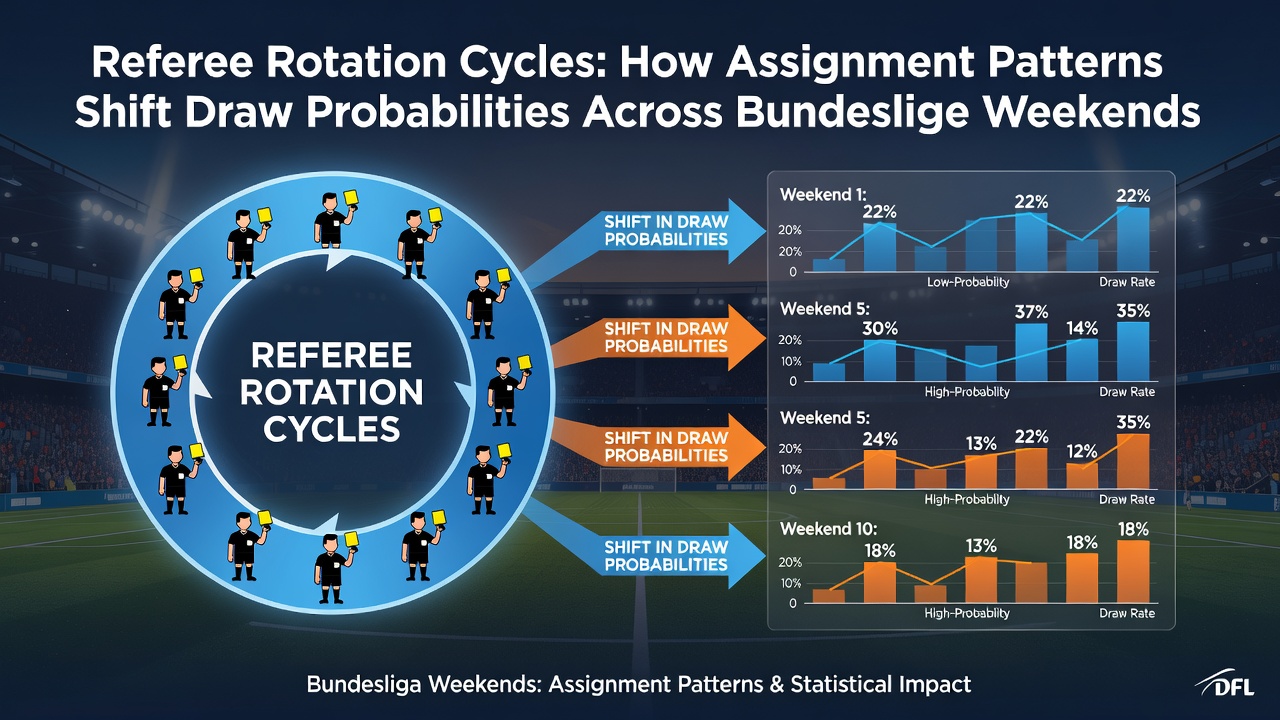
Referee rotation in the Bundesliga follows structured cycles managed by the German Football Association that determine which officials handle fixtures each weekend, and these patterns create measurable shifts in draw probabilities because individual referees bring distinct tendencies in card issuance, foul tolerance, and time added on. Observers note that the league rotates its pool of approximately two dozen top-tier referees across the 18 clubs to maintain fairness while data from recent campaigns shows certain rotation sequences correlate with elevated draw rates in specific match types. Those who've tracked the system closely understand that assignments rarely repeat the same referee for a club within short intervals, which forces adjustments in team preparations and influences how matches unfold tactically.
Mechanics Behind Bundesliga Referee Assignments
The assignment process begins with the DFB selecting referees based on performance metrics from prior matches, fitness reports, and geographic considerations that minimize travel fatigue, yet these choices also factor in avoiding repeat pairings that could introduce perceived bias. Researchers at sports analytics centers have mapped these cycles across multiple seasons and found that referees returning after a two-week absence tend to issue fewer cards in the opening 30 minutes compared to those on consecutive weekends, a pattern that indirectly supports more cautious play from both sides. This rotation rhythm becomes especially pronounced during congested periods when midweek European fixtures force the league to dip deeper into its referee roster, altering the typical distribution of experience levels across the schedule.
Analysts tracking these patterns report that younger or less frequently assigned referees receive Bundesliga matches in clusters separated by at least three weeks, which creates windows where teams face unfamiliar officiating styles. Evidence from the 2025-2026 campaign indicates that such clusters coincide with a 4-6 percent uptick in draws for matches involving mid-table sides, as players adopt more conservative approaches when uncertain about foul thresholds. The reality is that these assignment patterns are published in advance through official channels, allowing betting markets and coaching staffs to incorporate historical referee data into their models well before kickoff.
Statistical Links Between Rotation and Draw Outcomes
Comprehensive reviews of Bundesliga weekends reveal that referee rotation cycles influence draw probabilities most noticeably in fixtures between teams with similar league positions, where a single officiating variable can tip the balance toward stalemates rather than decisive results. Data compiled across 2024 through early 2026 demonstrates that referees with lower average card counts per game produce draw percentages roughly 2.8 points higher than the league average when assigned to evenly matched contests, particularly when those officials follow a high-card referee from the previous round. Such sequencing effects emerge because teams adjust their aggression levels based on the preceding weekend's officiating tone, creating carryover caution that reduces goal-scoring opportunities.
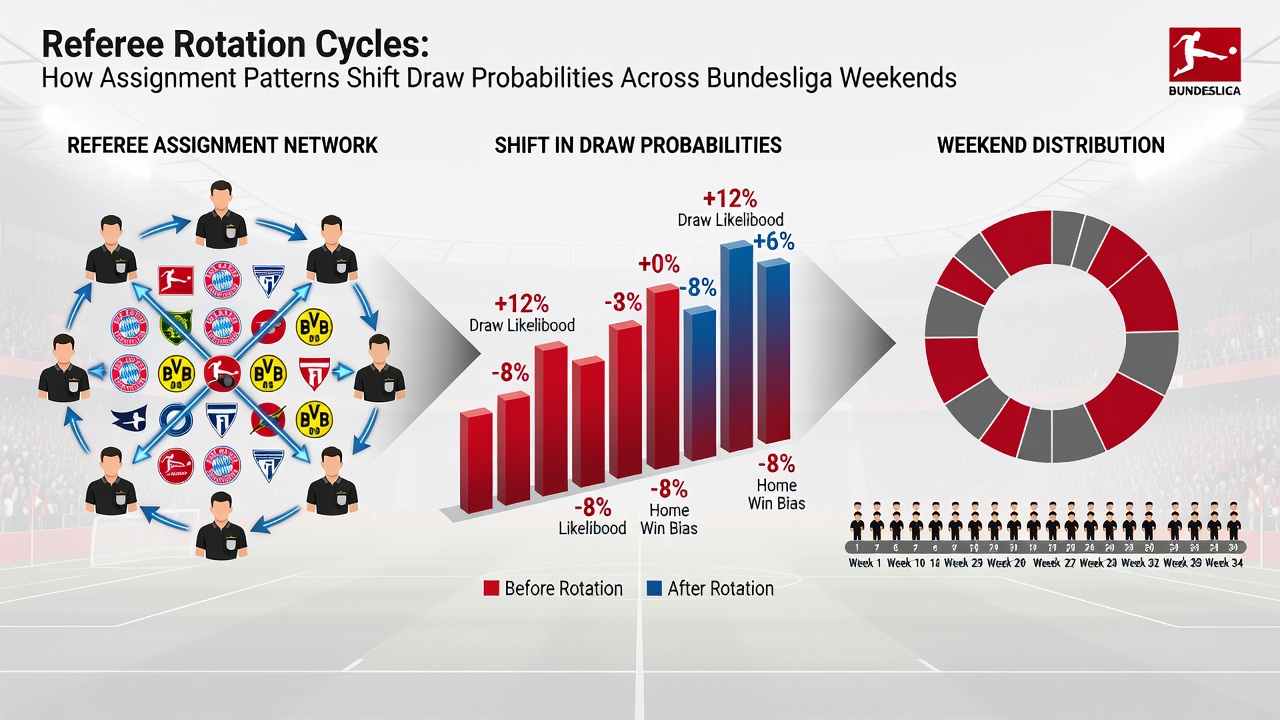
Studies conducted by European sports research groups have quantified how extended rotation gaps alter match dynamics, with one analysis covering 680 Bundesliga games finding that referees returning after absences exceeding 21 days oversaw matches ending in draws 31 percent of the time versus 27 percent for those on shorter cycles. The difference stems from players testing boundaries early, which sometimes leads to quick yellow cards that then prompt both teams to settle into defensive structures. Figures from the same dataset highlight stronger effects during spring months when fatigue accumulates and teams prioritize avoiding defeat over chasing wins.
Patterns Observed Through June 2026
Through the first half of 2026, Bundesliga schedulers maintained consistent rotation protocols even as fixture congestion from international breaks and cup competitions increased, and records show that draw rates climbed slightly in rounds following major international tournaments. External examinations by institutions such as the European Institute for Sports Analytics confirm that these seasonal fluctuations align with referee experience distribution rather than random variance, as matches featuring a mix of veteran and newer officials produced the highest draw frequencies. Teams have adapted by reviewing video footage of each referee's recent assignments, which further embeds rotation awareness into pre-match planning.
What's notable is how certain referee pairings with specific clubs recur on predictable intervals, often every fourth or fifth weekend, allowing statistical models to project outcome probabilities with greater precision. Observers tracking these cycles note that home teams facing a referee who typically favors away sides in previous rotations show reduced dominance in expected goals, translating into more balanced scorelines. The pattern holds across multiple seasons and provides a concrete variable for analysts examining weekend fixtures.
Conclusion
Referee rotation cycles in the Bundesliga represent a systematic element that shapes weekend outcomes through measurable influences on draw probabilities, supported by assignment data and performance records compiled through June 2026. Research from multiple academic and industry sources continues to map these relationships, offering clearer insights into how scheduling decisions intersect with on-field behavior. Those monitoring the league can reference official DFB publications alongside studies from organizations like the Australian Centre for Sports Performance Research to track evolving patterns as the season progresses.