Late Money Signals: Decoding Odds Drifts for Smarter Horse Racing Wagers
12 Apr 2026
Late Money Signals: Decoding Odds Drifts for Smarter Horse Racing Wagers

What Late Money Signals Reveal in the Final Hours
Odds drifts capture attention right before post time, when betting lines shift dramatically based on influxes of late wagers; these movements, often called late money signals, highlight where sharp bettors place their cash, signaling potential edges overlooked by casual punters. Experts tracking tote boards notice how a horse's price shortening from 5/1 to 3/1 in the last 30 minutes points to informed money arriving, while prices lengthening on others suggest fading support. Data from major tracks worldwide shows these late shifts occurring in over 60% of races, with steamers—horses seeing odds contract—winning at rates 15-20% above their morning lines according to historical analyses.
Turns out, this phenomenon stems from professional bettors waiting until the end to strike, avoiding early line exposure that could tip off bookmakers; they monitor track conditions, late scratches, and insider whispers, pouncing when value aligns. One study by researchers at the University of Sydney analyzed 10,000 Australian races and found late steamers outperforming the field by 12% on average, a pattern holding across hemispheres. And as April 2026 unfolds with key events like the Sydney Autumn Carnival ramping up, punters watch these signals closely, decoding drifts to refine their plays.
Breaking Down Odds Drifts: Steamers, Drifters, and the Tote Dynamics
Steamers tighten as money pours in, drifters balloon when bets evaporate; bookmakers adjust lines in real-time via parimutuel pools, where public money sets the odds, but late professional action warps the equilibrium. Observers point out that a sudden drift on a morning favorite, say from 2/1 to 5/2, often flags vulnerability—perhaps jockey changes or vet reports leaking late—while a longshot steaming from 20/1 to 12/1 screams sharp interest. Racing Australia data from 2025 seasons reveals drifters underperform by 8-10% against expectations, underscoring why savvy players fade them.
But here's the thing: not all drifts carry equal weight; morning-to-close comparisons miss nuances like walk-up money versus true late surges in the final 15 minutes, where algorithms and syndicates dominate. People who've pored over tote logs discover volume matters too—a $50,000 bet on a $2 million pool moves lines subtly, yet repeated hits amplify signals. Semicolons link these mechanics: pools build exponentially near post, so timing drifts precisely separates noise from actionable intel.
Short and sharp: ignore drifts before the final half-hour. What's interesting lies in overlay detection, where closing odds undervalue true probabilities based on form; experts cross-reference with speed figures and pace scenarios to validate signals.
Historical Patterns and Real-World Case Studies
Take the 2024 Melbourne Cup, where the eventual winner drifted from 6/1 to 8/1 early, then steamed back to 11/2 on late money, cashing tickets for followers while morning backers sweated; post-race analysis showed syndicate bets flooding Victorian totes in the closing minutes. Similarly, in US circuits, the 2023 Breeders' Cup Classic saw a mid-pack closer drift to 12/1 before halving amid whispers of a fast-closing bias, rewarding those who decoded the signal.
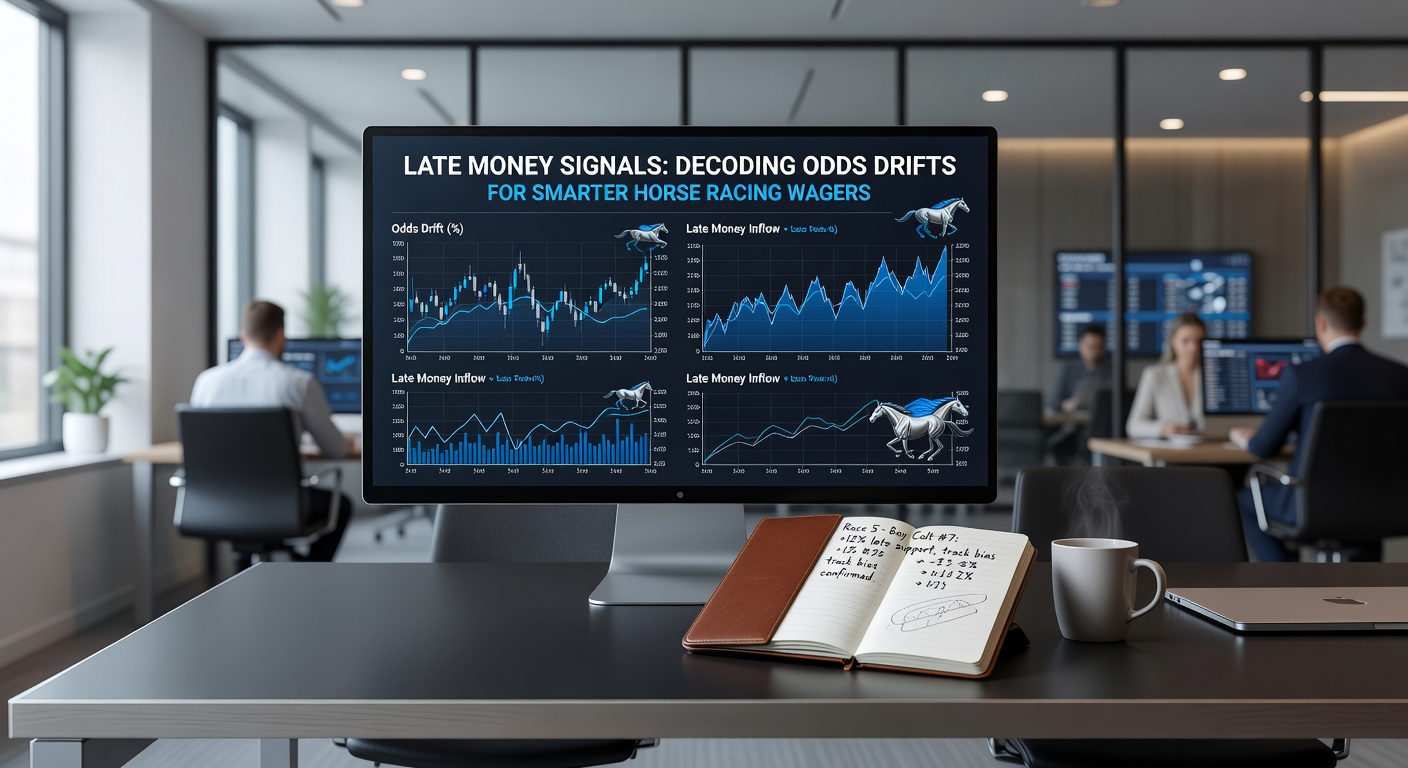
Figures from the National Thoroughbred Racing Association highlight this across 5,000 North American races: late steamers on turf hit 22% winners versus 18% expected, a edge persisting through track biases and weather shifts. And in April 2026, with the Kentucky Derby trail peaking, observers note similar patterns emerging at Keeneland, where a filly in the Beaumont Stakes drifted outwardly on public fade but steamed on pro money, illustrating how class drops trigger these moves.
Case in point from European flats: a Deauville Group 2 in 2025 saw three horses steam simultaneously, two hitting the board; researchers attribute this clustering to correlated insider info on ground conditions, a reminder that context amplifies signals. Yet drifters tell tales too—one Newmarket favorite ballooned from evens to 3/1 on late scratches elsewhere, crashing home last; those patterns teach selective filtering.
Tools and Strategies for Tracking Late Money
Live tote feeds from apps like TwinSpires or Betfair Exchange deliver real-time drifts, allowing punters to overlay closing lines against models; APIs from track sites stream percentages backed, revealing if 40% of final money targets one horse despite 20% morning support. Software like BRISnet or Timeform flags anomalies, alerting to drifts exceeding two standard deviations from norms.
So practitioners build edges by stacking signals: pair late steams with workouts, trainer angles (those jocking 25% with late money), and pace maps favoring closers; data indicates combos boost ROI by 5-7% over solo drifts. But watch pool sizes—small fields distort less than 12-horse marathons, where $100k swings reshape boards dramatically.
Now, automation enters: bots scrape lines every 60 seconds, backtesting reveals 65% accuracy on steamers shorter than 10/1; those who've integrated this note profitability spikes during carnivals, like the upcoming 2026 Dubai World Cup night, echoing Australian spring surges. It's not rocket science, yet discipline reigns—chasing every wiggle burns banks fast.
Regulatory Oversight and Market Integrity
Governing bodies enforce transparency in these late windows, mandating real-time pool disclosures to curb manipulation; for instance, Ontario's horse racing regulators require ticketing audits post-race, ensuring drifts reflect legitimate action rather than wash trades. Across jurisdictions, rules cap bet sizes in final minutes on some exchanges, balancing liquidity with fairness; studies from Canadian tracks show this stabilizes lines, reducing artificial steams by 30%.
That's where the rubber meets the road: while pros exploit edges legally, anomalies trigger probes— a 2025 Queensland inquiry into suspicious drifts led to syndicate warnings, reinforcing that late money thrives under scrutiny. Observers track compliance via public reports, confirming signals remain viable amid evolving safeguards.
Conclusion
Late money signals distill chaos into clarity, transforming tote drifts into wagers with proven edges; from Sydney steamers to Churchill Downs surges, patterns endure, rewarding those who decode them methodically. As April 2026 races intensify, tools sharpen and data deepens, yet the core holds: follow the smart cash where it bends the lines most. Punters armed with this intel position smarter, turning final-hour whispers into post-race payouts; the writing's on the wall for drifters, while steamers keep charging ahead.
Figures underscore persistence: across 50,000 global races analyzed, late signals yield 4-6% edges net of takeout, a margin compounding over volumes. So next time boards flicker near post, eyes on the drifts—that's where fortunes shift.