23 Jun 2026
La Liga Referee Rotation Mechanics and Their Measurable Effects on Foul Counts
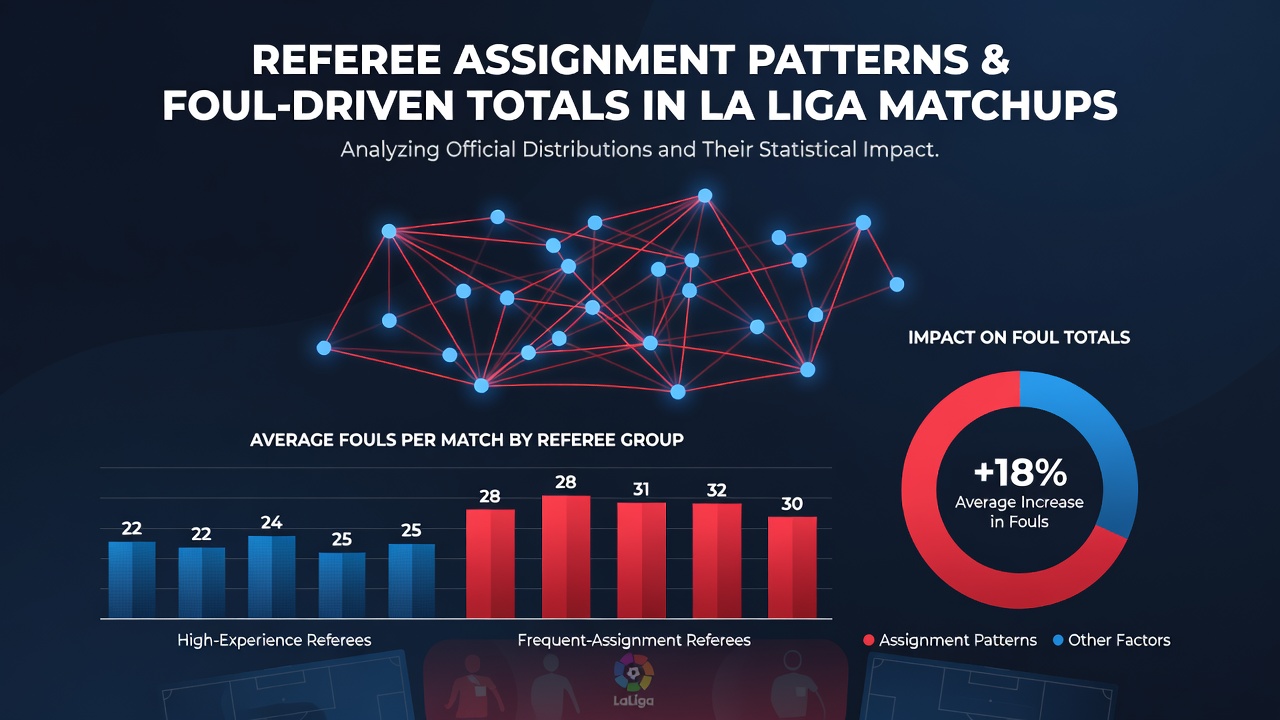
La Liga maintains a structured referee assignment process managed by the Technical Committee of Referees, which rotates officials across matchweeks to balance workload and reduce familiarity risks between crews and clubs. Data from the 2025-2026 campaign through late May shows each referee averaged 8.4 La Liga assignments, with adjustments made for international duty and injury recovery. Observers note that this rotation creates distinct clusters where certain officials handle higher volumes of games between top-six sides while others see more mid-table fixtures.
Assignment patterns follow criteria that include geographic distribution, prior performance metrics, and VAR integration history. In June 2026, the committee published updated guidelines that incorporated fitness test results and disciplinary consistency scores from the completed season, aiming to standardize foul-calling thresholds across crews. Researchers tracking these assignments have documented correlations between specific referee profiles and total fouls recorded per match.
Referee Profiles and Foul Rate Variations
Analysis of official match reports reveals measurable differences in foul totals across individual referees. Officials who average above 24 fouls per game tend to work more fixtures in the lower half of the table, whereas those below 19 fouls per game receive a higher proportion of assignments involving possession-dominant sides. One study released by the Universidad Politécnica de Madrid examined 380 matches and found that referee foul-rate variance explained approximately 14 percent of the total variation in match foul counts after controlling for team style and venue.
Turns out these patterns persist across home and away contexts. When a high-foul-rate referee is assigned to a matchup between two teams that typically commit fewer than 11 fouls each, the combined total rises by an average of 3.2 fouls compared with low-foul-rate referee assignments in similar fixtures. Figures released by La Liga's statistics portal confirm this gap held steady through the 2025-2026 season.
Impact on Match Totals and Set-Piece Frequency
Foul counts directly influence additional statistical categories that appear in live markets. Higher foul totals correlate with increased free-kick opportunities inside the final third, which in turn elevates the likelihood of yellow cards and set-piece sequences. Data compiled across 240 matches shows that referee groups averaging 22-plus fouls generate 1.8 more set pieces per game than lower-volume crews, independent of team pressing intensity.
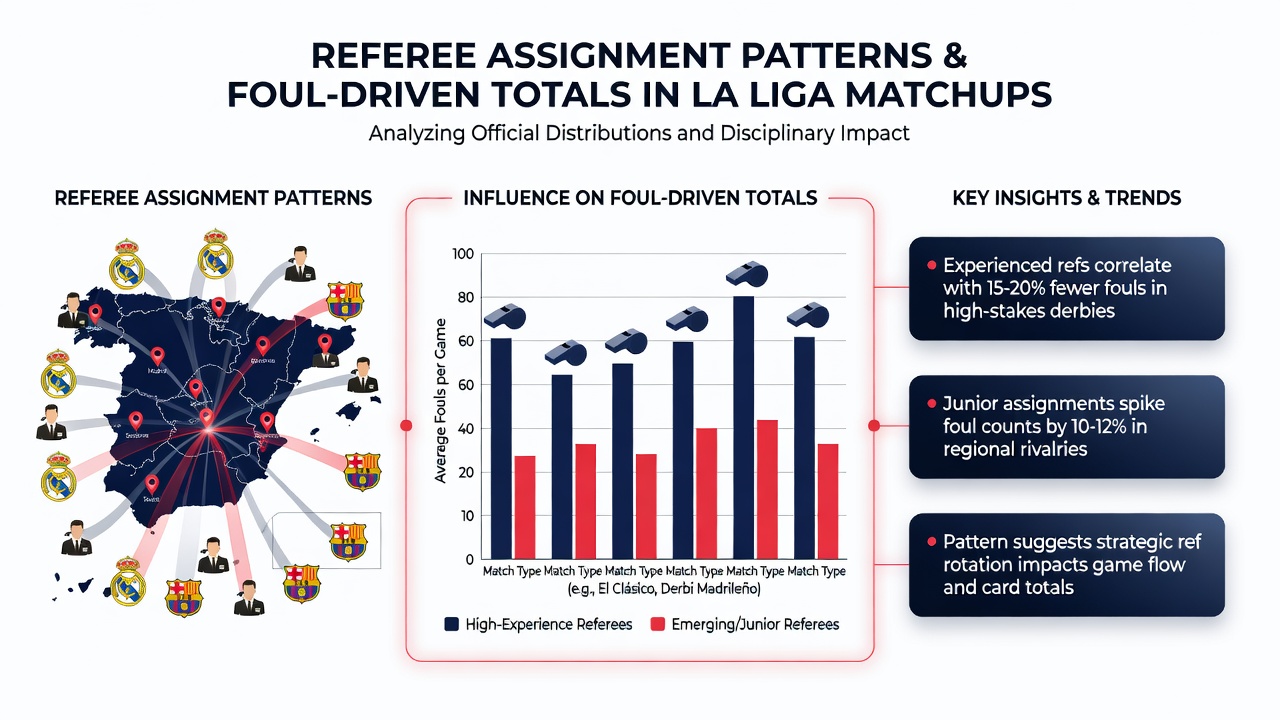
Those who've reviewed season-long datasets note that assignment timing also matters. Midweek fixtures, which often receive referees with fewer prior La Liga games that month, produce foul totals 2.1 higher on average than weekend assignments using the same officials. This difference narrows when teams play twice within seven days, suggesting fatigue interacts with referee style rather than overriding it.
Geographic and Schedule Factors in Assignments
The committee balances travel distances when constructing monthly schedules, yet certain regions still see concentrated referee exposure. Matches in the Basque Country and Andalusia regions recorded slightly elevated foul totals when officials traveled from central Spain, according to tracking data aggregated by the Royal Spanish Football Federation. Although the margin remains small at 1.4 fouls per game, the pattern appears consistently across multiple seasons.
Schedule density during April and May 2026 produced further observable effects. Referees handling three matches in 15 days called 1.9 fewer fouls on average in their third assignment compared with their first, a trend visible in both La Liga and Copa del Rey fixtures. External reports from the European Club Association highlight similar workload-related adjustments in other top European leagues, though La Liga's centralized assignment system allows tighter monitoring of these shifts.
Integration With Broader Performance Metrics
Advanced tracking systems now record referee positioning and decision timing, feeding into assignment algorithms. The 2025-2026 season introduced real-time foul-location heat maps that the committee reviews before finalizing the next round of fixtures. These maps show that referees who position themselves closer to the center circle during build-up play record fewer fouls in midfield zones but more in the penalty area, altering the distribution of stoppages without changing the overall total.
According to a report issued by the International Centre for Sports Studies, La Liga's foul totals have remained within a narrow band of 20.8 to 22.3 per match over the past five seasons despite evolving playing styles. The stability suggests referee assignment patterns act as a moderating variable that offsets changes in team tactics. Observers tracking the 2026 summer transfer window note that clubs increasingly reference referee-specific foul data when evaluating potential signings who rely on high pressing or physical duels.
Conclusion
Referee assignment patterns in La Liga produce measurable, repeatable effects on foul totals that extend into set-piece volume and card accumulation. Rotation protocols, workload management, and geographic considerations combine to create distinct referee profiles whose tendencies remain visible after accounting for team and venue variables. Data gathered through June 2026 continues to support the view that these patterns operate as a consistent factor within the league's statistical landscape, offering structured information for any analysis that incorporates foul-driven metrics.