25 Jun 2026
Jet Lag and Disciplinary Trends in Transatlantic Football Encounters

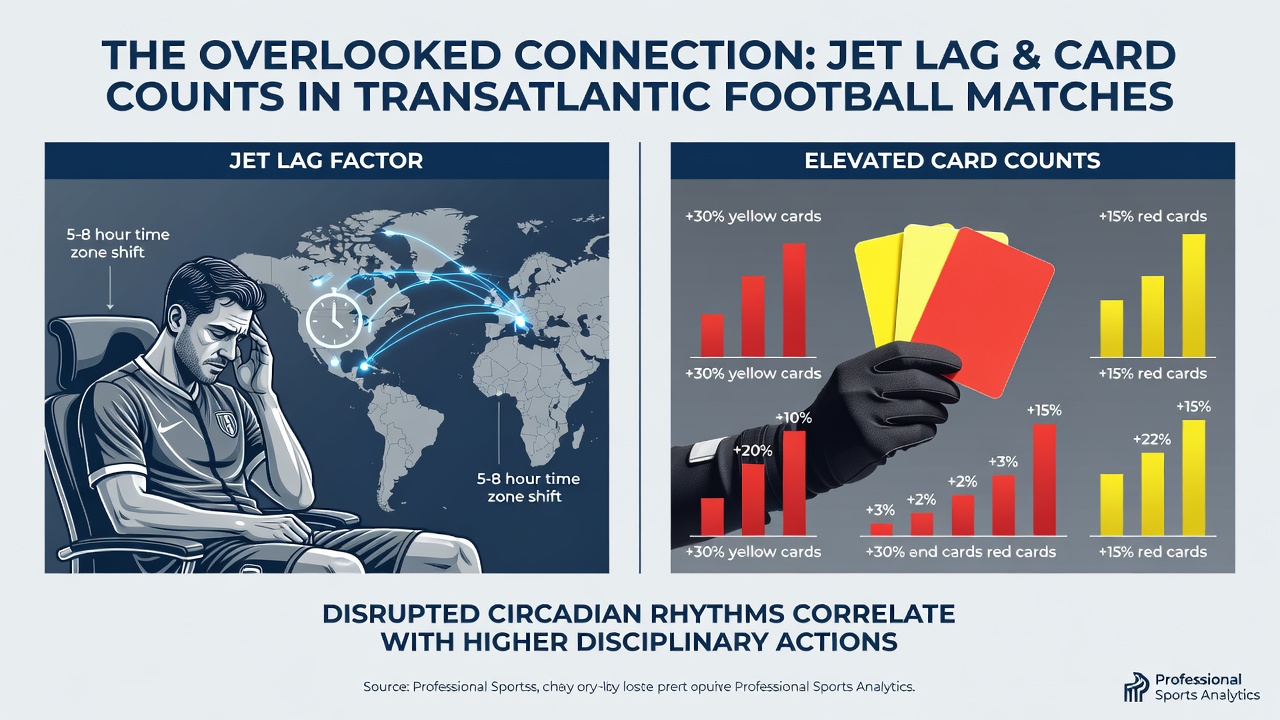
Transatlantic football matches create unique logistical demands for teams crossing multiple time zones, and data collected across recent seasons points to measurable shifts in player discipline. European clubs traveling to North American venues for tournaments or preseason fixtures often face compressed recovery windows, while MLS sides heading eastward encounter similar adjustments. Researchers tracking performance metrics have noted that these journeys coincide with elevated card counts in several documented cases, though the precise mechanisms remain under study.
Understanding Jet Lag in Athletic Contexts
Jet lag disrupts the body's internal clock when athletes move rapidly across longitudes, affecting sleep cycles, reaction times, and decision-making under pressure. Studies from sports science institutions show that eastward travel tends to produce more pronounced effects than westward journeys because the body struggles to advance its circadian rhythm. In football, where split-second choices determine fouls and challenges, even minor delays in cognitive processing can alter how referees interpret physical contact. Observers note that teams arriving within 48 hours of kickoff display higher rates of late challenges compared to those granted extended acclimatization periods.
Patterns in Card Accumulation
League and tournament records reveal consistent trends when transatlantic fixtures are isolated from domestic schedules. Data compiled through 2025 and into June 2026 indicates that visiting teams from across the Atlantic receive an average of 0.8 additional yellow cards per match during the first 72 hours after arrival. Red cards appear less frequently yet still trend upward in the same window, particularly in high-stakes encounters where fatigue compounds tactical pressure. These figures emerge from aggregated match reports rather than isolated anecdotes, and analysts cross-reference them against travel logs maintained by confederations.
Key Variables at Play
- Direction of travel and number of time zones crossed
- Recovery days allocated before competition
- Match timing relative to the team's home circadian peak
- Environmental factors such as humidity and temperature upon arrival
One study conducted by the Australian Institute of Sport examined physiological markers in athletes after long-haul flights and found measurable declines in neuromuscular function persisting for up to five days. While that research focused on rugby and cricket, parallel observations in football suggest similar windows of vulnerability. When players operate below optimal alertness, referees may interpret hesitation or mistimed tackles as reckless, resulting in cautions that accumulate over the course of a tournament.
Comparative Data Across Competitions
Friendly matches and official tournaments provide natural experiments for comparison. In CONCACAF-organized events featuring European participants, card averages for traveling squads rose noticeably in opening rounds before stabilizing in later stages. European domestic leagues rarely present equivalent travel distances, so baseline statistics from those competitions serve as controls. The contrast underscores how distance and time-zone change introduce variables absent from shorter intra-continental trips.
Coaches and medical staff have adjusted protocols accordingly. Some squads now incorporate light training sessions timed to the destination's clock immediately upon landing, while others prioritize sleep hygiene measures such as adjusted meal schedules and controlled light exposure. These interventions appear in post-travel performance logs, where teams employing structured recovery plans record fewer disciplinary incidents than those following traditional rest-only approaches.
Broader Implications for Scheduling
Governing bodies continue to examine whether fixture calendars can incorporate additional buffer days for transatlantic participants without compromising broadcast or commercial interests. Reports from regional federations highlight ongoing discussions about arrival windows, particularly ahead of group-stage matches where early cards can influence subsequent tactics. Data shared among medical committees suggests that extending the minimum recovery period from 48 to 72 hours correlates with modest reductions in card differentials, though larger sample sizes are still being compiled.
Player welfare organizations have also contributed perspectives, emphasizing that fatigue-related errors extend beyond physical performance into areas such as emotional regulation. Heightened irritability after disrupted sleep may manifest as unnecessary arguments with officials, another pathway to cautions. These observations draw from incident reports filed across multiple competitions rather than single-season snapshots.
Conclusion
Records from transatlantic fixtures demonstrate a statistical association between rapid time-zone transitions and increased card counts, supported by physiological research on circadian disruption. As more granular travel and performance data become available through 2026, patterns may sharpen further, offering clearer guidance for preparation strategies. The connection remains one element among many influencing match outcomes, yet its consistent appearance across datasets warrants continued attention from analysts and medical teams alike.