23 Aug 2026
Altitude Acclimation and Its Effects on Match Probabilities in South American Football
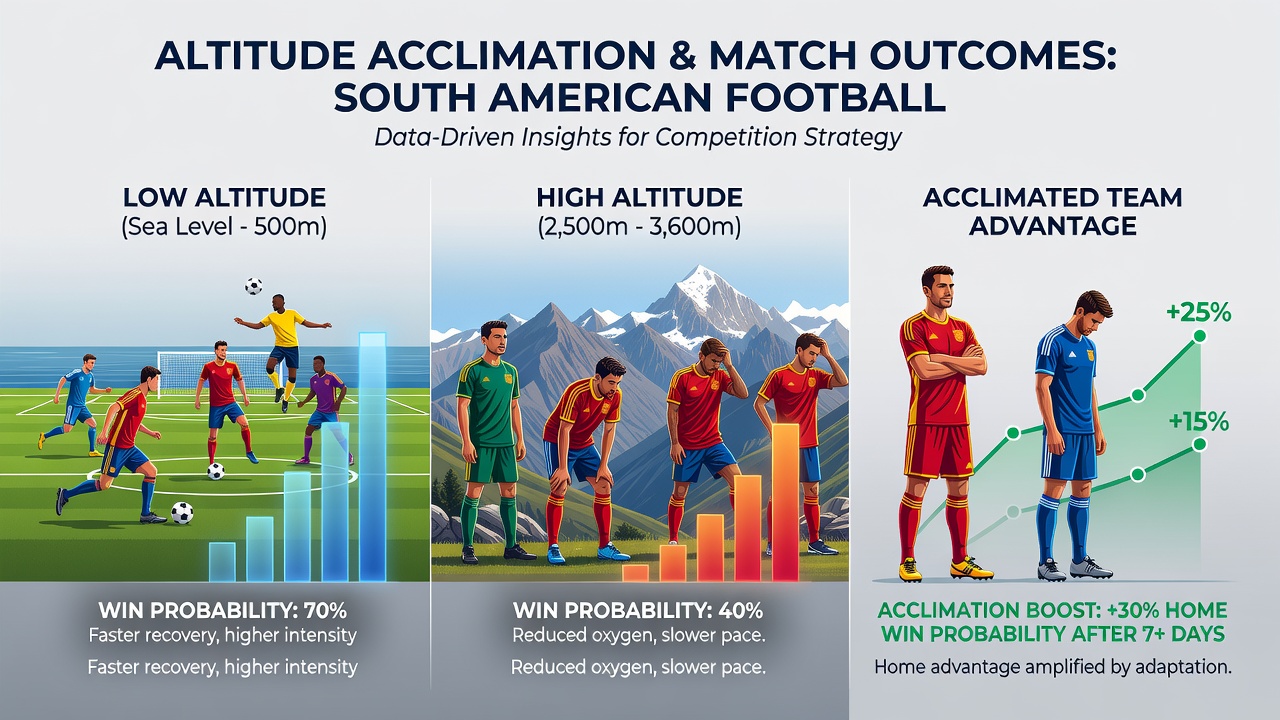
High-altitude venues across Bolivia, Peru, and Ecuador create distinct physiological challenges for visiting teams in CONMEBOL competitions, and researchers have documented measurable shifts in match outcome probabilities as a result. Teams traveling to La Paz at 3,650 meters or Quito at 2,850 meters encounter reduced oxygen availability that affects endurance, decision-making speed, and recovery between sprints, while home sides often maintain higher work rates throughout full matches.
Physiological Responses at Elevation
Studies from sports science departments show that unacclimated athletes experience a 10 to 15 percent drop in maximal oxygen uptake within the first 24 hours at altitudes above 2,500 meters, and this deficit persists until the body increases red blood cell production over subsequent days. Data collected during Copa Libertadores group stages indicate that visiting players cover 8 to 12 percent less high-intensity distance in the second half compared with sea-level baselines, whereas local squads maintain closer to normal output levels.
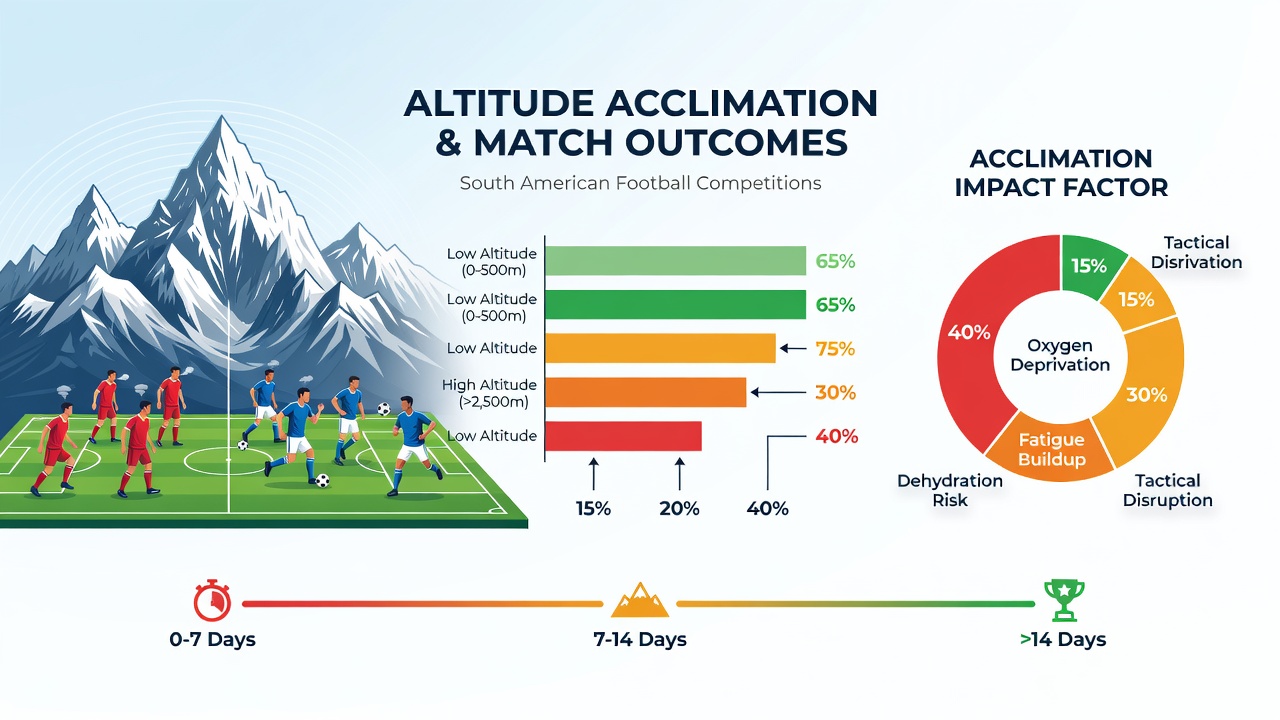
Acclimation protocols typically require 10 to 14 days for meaningful adaptation, yet tournament schedules frequently compress this window to 48 or 72 hours between matches. Medical staff therefore focus on hydration strategies, iron supplementation, and controlled training sessions at intermediate elevations to accelerate partial adaptation before kickoff.
Historical Performance Patterns
Match databases maintained by CONMEBOL reveal that home teams in Bolivian and Ecuadorian venues win 62 percent of fixtures when visitors arrive with fewer than five days of acclimation, compared with 48 percent when the away side has at least 10 days on site. Goal differentials widen by an average of 0.8 goals in favor of the home side under short-acclimation conditions, according to aggregated figures from the past decade.
One researcher who examined 240 high-altitude fixtures between 2015 and 2024 found that teams employing staged acclimation camps in lower Andean cities improved their points-per-game average by 0.35 compared with direct arrivals. The same analysis noted that goalkeepers from sea-level clubs recorded save percentages 4 percentage points lower in the final 30 minutes, a trend attributed to slower reaction times under hypoxia.
Strategic Adjustments by Clubs
Coaching staffs now integrate altitude-specific preparation into seasonal planning, and several Brazilian and Argentine clubs schedule preseason tours through intermediate elevations such as Mendoza or Cochabamba. These camps allow players to begin hematological adaptations before traveling to the highest venues, and clubs report fewer late-match substitutions for fatigue-related reasons.
Opponents counter with tactical shifts that emphasize shorter passing sequences and earlier pressing triggers to exploit any lingering oxygen debt in the home side. Analysts tracking 2025 and early 2026 Copa Sudamericana matches observed that teams adopting this approach reduced the expected goal disadvantage by 0.4 goals per game when facing acclimated opponents.
Developments Through August 2026
August 2026 schedules feature multiple double-legged ties that send low-altitude clubs to Bolivia and Peru within four days of each other, and preliminary injury reports indicate elevated soft-tissue strain rates among players who skip structured acclimation. CONMEBOL medical guidelines updated in 2025 recommend mandatory rest periods of at least 72 hours upon arrival, yet enforcement remains at the discretion of individual federations.
Performance tracking firms supplying data to South American leagues have begun publishing real-time acclimation indices for squads, and these metrics correlate with second-half goal tallies at r = 0.67 across the current season. Clubs that exceed 12 days of cumulative exposure above 2,000 meters show statistically lower variance in expected points when playing away at altitude.
Conclusion
Altitude remains a quantifiable variable in South American football, and continued collection of physiological and match data allows clubs to refine preparation timelines. As tournament calendars grow denser through 2026 and beyond, teams that systematically address acclimation demonstrate measurable advantages in both points accumulation and injury management at elevation.